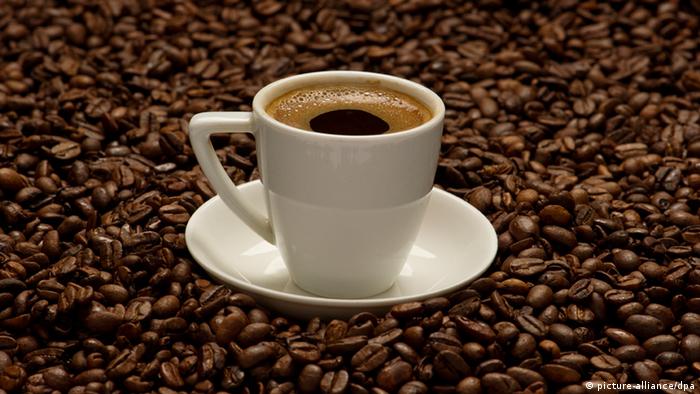
Elephants are the latest animals to digest coffee and fruits which are
later picked from their dung for human consumption. While the idea may
make for good business, conservations worry about the animals.
Elephants rescued from exploitation in northern Thailand are now being
harnessed to help humans enjoy a better tasting cup of coffee. Around 20
elephants from the Golden Triangle sanctuary in Chiang Saen are used in
the production of "elephant dung coffee."
The animals are fed the coffee cherries along with their daily fodder. Later the cherries are collected from the elephants' faeces and washed. The beans are then extracted and are sent to Bangkok to be roasted. The end result is reported to be the world's most expensive coffee, with a cup costing as much as $50 in some five star hotels.
"When elephants digest the food, there's an enzymatic reaction that occurs," said Blake Dinkin, the Canadian businessman behind the idea. "The enzymes break down the protein which is one factor responsible for bitterness. So less protein means a less bitter tasting coffee."
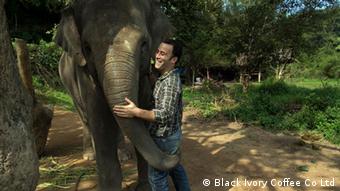 Blake Dinkin, founder of Black Ivory Coffee, and 'employee'
As elephants are herbivores, their stomachs also act as
"natural fermentation tanks" which help infuse the fruit into the bean,
Dinkin explained to DW.
After spending 10 years and sinking $400,000 (310,000 euros) of his own money into the idea, the 42-year-old entrepreneur was keen to avoid the unethical production methods associated with another animal ingested coffee.
The other side
Kopi Luwak received international attention as it is made with coffee beans excreted by the Indonesian palm civet cat. In recent years some producers have been criticized by animal conservationists, angry at the use of intensive farming methods. The civets are often kept in cages where they are forced fed the coffee beans. One estimate also suggests that more than 60 percent of civet coffee is counterfeit.
Earlier this year, a report released by Traffic, the anti-wildlife crime NGO warned about the growing use of civets to produce coffee, claiming that many species were already under threat from habitat loss.
"We're worried that this coffee is leading to more civet hunting in the wild," said Petch Manopawitr, a program manager at the World Wildlife Fund (WWF). "The civet is an unprotected species in Indonesia so consumers should be very wary of trying civet coffee."
By contrast Manopawitr sees elephant dung coffee as more "innovative," as the elephants are already domesticated and there are benefits for the sanctuary owner which helps ensure the future welfare of the elephants.
Dinkin says he donates eight percent of his sales back to the foundation to ensure that elephant dung coffee - which goes by the brand name Black Ivory - is not exploitative.
No elephants harmed
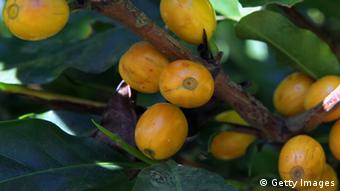 The elephants are fed coffee berries, which are only partially digested
"For the elephant, the coffee is just a snack, it's not meant
to replace their diet. Elephants eat about 250 kilos a day and a tiny
fraction of that would be coffee," he said, adding that scientists
confirmed that the elephants don't absorb any caffeine.
For anyone worried about the possibility of drinking small particles of elephant dung, Dinkin says the coffee berries are thoroughly washed and tested to ensure the highest hygienic standards.
After selling out the first batch of 70 kilos, the company has ramped up production six-fold but plans to remain an artisanal brand aimed at a distinguished consumer.
"They'd have to be open minded, adventurous, affluent enough to want to spend the extra money for the coffee and probably someone who likes telling a good story."
Already on sale at several luxury hotel brands in Thailand, Dubai and the Maldives, food and beverage managers say customers are not put off by the unusual fermentation process.
Durian and dung?
If elephant dung coffee isn't unconventional enough, a pungent fruit, popular throughout Southeast Asia, is also being fed to animals. The durian is often described as smelling like unwashed socks or rotting flesh and that's before it passes through an elephant's digestive system.
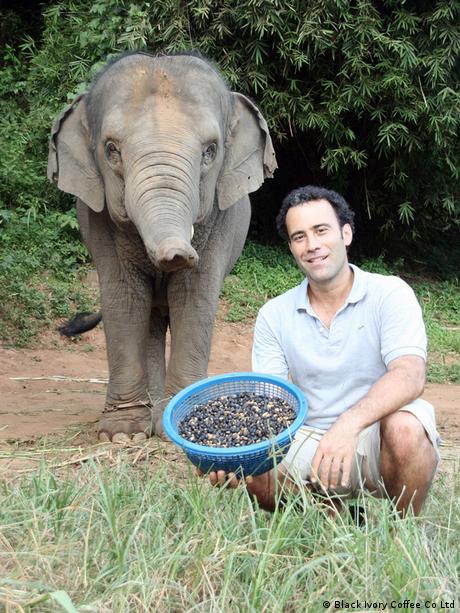 Dinkin says the caffeine does not harm the elephants
Malaysian media reports that an indigenous group - the Orang
Asli - wait for elephants to swallow small durians whole, and then
follow them until they excrete the fruit. It is collected, cleaned up
and sold for its apparent aphrodisiac properties. The fermentation
process also enhances the taste, according to reports.
"It's fair enough to try something new, so long as it doesn't have negative consequences for the wild population," said Manopawitr who is bemused by the idea.
"I'd be worried if it was creating more demand for strange things which negatively impacted exotic species. That would really be a step backwards, especially when in some cases there is no scientific proof of benefit."
The New Straits Times reported that some businessmen were prepared to pay up to $300 for the elephant dung durian.
But whether the odoriferous fruit is an urban legend, animal ingested foods are here to stay. Conservationists worry that as large food companies try to get in on the act, animal welfare will take a back seat in the rush for profits.
The animals are fed the coffee cherries along with their daily fodder. Later the cherries are collected from the elephants' faeces and washed. The beans are then extracted and are sent to Bangkok to be roasted. The end result is reported to be the world's most expensive coffee, with a cup costing as much as $50 in some five star hotels.
"When elephants digest the food, there's an enzymatic reaction that occurs," said Blake Dinkin, the Canadian businessman behind the idea. "The enzymes break down the protein which is one factor responsible for bitterness. So less protein means a less bitter tasting coffee."
Blake Dinkin, founder of Black Ivory Coffee, and 'employee'
After spending 10 years and sinking $400,000 (310,000 euros) of his own money into the idea, the 42-year-old entrepreneur was keen to avoid the unethical production methods associated with another animal ingested coffee.
The other side
Kopi Luwak received international attention as it is made with coffee beans excreted by the Indonesian palm civet cat. In recent years some producers have been criticized by animal conservationists, angry at the use of intensive farming methods. The civets are often kept in cages where they are forced fed the coffee beans. One estimate also suggests that more than 60 percent of civet coffee is counterfeit.
Earlier this year, a report released by Traffic, the anti-wildlife crime NGO warned about the growing use of civets to produce coffee, claiming that many species were already under threat from habitat loss.
"We're worried that this coffee is leading to more civet hunting in the wild," said Petch Manopawitr, a program manager at the World Wildlife Fund (WWF). "The civet is an unprotected species in Indonesia so consumers should be very wary of trying civet coffee."
By contrast Manopawitr sees elephant dung coffee as more "innovative," as the elephants are already domesticated and there are benefits for the sanctuary owner which helps ensure the future welfare of the elephants.
Dinkin says he donates eight percent of his sales back to the foundation to ensure that elephant dung coffee - which goes by the brand name Black Ivory - is not exploitative.
No elephants harmed
The elephants are fed coffee berries, which are only partially digested
For anyone worried about the possibility of drinking small particles of elephant dung, Dinkin says the coffee berries are thoroughly washed and tested to ensure the highest hygienic standards.
After selling out the first batch of 70 kilos, the company has ramped up production six-fold but plans to remain an artisanal brand aimed at a distinguished consumer.
"They'd have to be open minded, adventurous, affluent enough to want to spend the extra money for the coffee and probably someone who likes telling a good story."
Already on sale at several luxury hotel brands in Thailand, Dubai and the Maldives, food and beverage managers say customers are not put off by the unusual fermentation process.
Durian and dung?
If elephant dung coffee isn't unconventional enough, a pungent fruit, popular throughout Southeast Asia, is also being fed to animals. The durian is often described as smelling like unwashed socks or rotting flesh and that's before it passes through an elephant's digestive system.
Dinkin says the caffeine does not harm the elephants
"It's fair enough to try something new, so long as it doesn't have negative consequences for the wild population," said Manopawitr who is bemused by the idea.
"I'd be worried if it was creating more demand for strange things which negatively impacted exotic species. That would really be a step backwards, especially when in some cases there is no scientific proof of benefit."
The New Straits Times reported that some businessmen were prepared to pay up to $300 for the elephant dung durian.
But whether the odoriferous fruit is an urban legend, animal ingested foods are here to stay. Conservationists worry that as large food companies try to get in on the act, animal welfare will take a back seat in the rush for profits.


